
3 Smart Moves for Kids’ Rooms & Closets
Keeping kids’ rooms and closets organized can feel like a never-ending job. You fold the clothes, straighten the shoes, and put everything back where it belongs—only to find yourself doing it all over again a few days later.
As a professional organizer in Omaha, one thing I’ve learned is that the best organizing systems aren’t necessarily the prettiest or most elaborate. They’re the ones that are easy for your family to maintain. When it comes to my own kids’ closets, I use a few simple systems that cut down on clutter, make it easier for my kids to find what they need, and save me time, too.
Here are three of my favorite Smart Moves for kids’ rooms and closets.
Smart Move #1: Hang the Tops, Fold the Bottoms
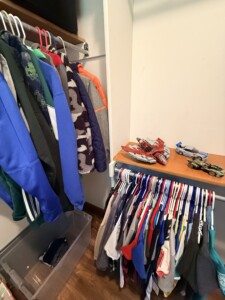
Once kids reach about kindergarten age, I often recommend hanging their tops instead of storing them folded in drawers. Why? In my experience, drawers of neatly folded shirts rarely stay that way!
Kids shuffle through the stacks looking for the shirt they want. Shirts get pulled out and stuffed back in, and pretty soon neither the child nor the parent can easily see what’s actually in the drawer. If your child can maintain a drawer of folded shirts—great! Keep doing what works for your family. But in my experience, that’s the exception rather than the rule.
Hanging tops makes it easy to see everything at a glance. Your child can flip through their choices without creating a mess in the process. And there’s another benefit I love: you can skip folding the shirts. Instead of folding a shirt only to have it unfolded later, simply put it on a hanger. It takes seconds.
I like to save dresser drawers for:
- Shorts
- Jeans
- Leggings
- Pajamas
This creates a really simple system for kids to learn: tops hang; bottoms and pajamas go in drawers. The goal isn’t a picture-perfect closet. It’s a closet your child—and you—can realistically maintain.
Smart Move #2: Add a “Too Small” Bin
Kids grow quickly, which means clothes are constantly moving in and out of their wardrobes. One simple solution I use in my own home is a “Too Small” bin in each of my kids’ closets.
When a child tries something on and it no longer fits, don’t put it back on the hanger or into the drawer. Put it straight into the Too Small bin. Otherwise, that same shirt or pair of pants will probably make its way back into the rotation. Your child grabs it again, discovers—again—that it doesn’t fit, and now you’ve handled the same piece of clothing multiple times.
The Too Small bin gives you somewhere to deal with it immediately without stopping what you’re doing to make decisions about donating, selling, saving, or handing it down. Once the bin fills up, you can go through everything at one time and decide what happens next.
The location is important, too. Keep the bin right in the closet. If dealing with an outgrown item takes only a few seconds, you’re much more likely to actually do it.
Smart Move #3: Get Occasional Shoes Out of the Drop Zone
If you have kids, shoes can quickly take over the area by the door.ne wayo keep our drop zone from getting overloaded is by asking a simple question: Does this pair of shoes need to be here every day?
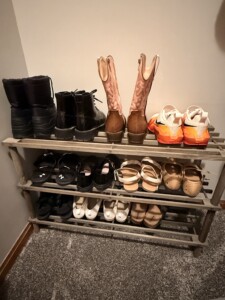
If the answer is no, I store it in the child’s bedroom closet instead. In our house, that includes things like:
- Dress shoes
- Nice shoes
- Nicer sandals
- Boots
- Other shoes that aren’t part of the everyday rotation
The kids still know where their shoes are when they need them, but those occasional pairs aren’t competing for space with the shoes we’re grabbing every day. Snow boots are an exception in our house. During an Omaha winter, I keep those in the garage. They’re convenient when we need them, and snowy, wet boots don’t need to travel through the house.
This is a good organizing principle to use throughout your home: the things you use most often should get the easiest-to-access storage spaces. Your drop zone is valuable real estate. Save it for the things your family actually needs as they’re heading out the door.
Make Your Kids’ Organizing Systems Easier to Maintain
Kids’ rooms and closets don’t need complicated organizing systems. In fact, simpler is usually better.
Hang clothes when hanging makes them easier to see. Give outgrown clothing somewhere to go immediately. And don’t let occasionally used items take over your family’s everyday storage spaces. Most importantly, pay attention to what’s actually working for your child. If your child can keep folded shirts neat in a drawer, wonderful. If they can’t, change the system instead of continually reorganizing the drawer.
A good organizing system should work with the people using it—not against them.
If your kids’ rooms, closets, or other spaces in your home have become difficult to keep up with, Smart Move Organizing can help. I work with families in the Omaha area to create practical, personalized organizing systems that make everyday life easier.
Ready for a smarter, more organized home? Contact Smart Move Organizing to get started.